Two Lanes: What the curl Rust Port Teaches About Agent Work
185,000 lines of C, converted into 340,000 lines of Rust in a little over three weeks. In the same period, the actual project merged over 300 commits and shipped about 200 bugfixes.
That is Daniel Stenberg on the agent-driven Rust port of curl, as quoted by Simon Willison. The numbers matter less for raw speed and more for what they say about structure.
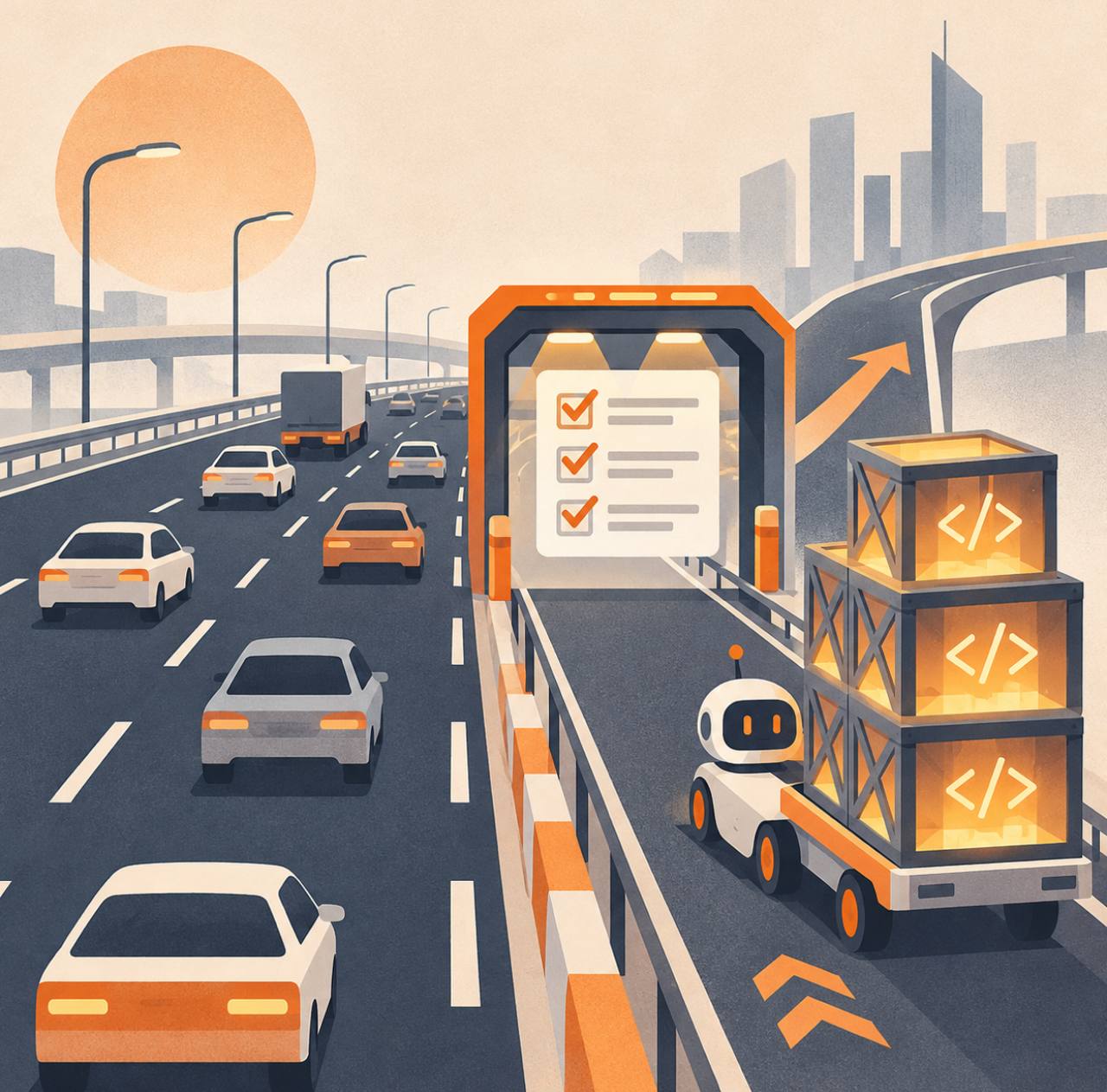
Two efforts ran in parallel and neither blocked the other. The agent lane carried the bulk rewrite with no release pressure. The mainline kept its normal cadence: merges, fixes, users who never noticed a thing.
That is a reusable architecture for agent work in any codebase:
- Mechanical, verifiable bulk work goes to the agent lane: ports, migrations, boilerplate, docs.
- The mainline keeps human cadence: review, ship, incident response.
- Verification is the interface between the lanes: tests, type checks, diff review. If a lane cannot be verified cheaply, do not parallelize it.
- Generated lines become an asset only after they pass mainline review and land as normal commits.
My take: the interesting question is not whether agents can produce 340k lines. It is which parts of your project can move on a side lane without touching the mainline. Those are the parts worth delegating first.